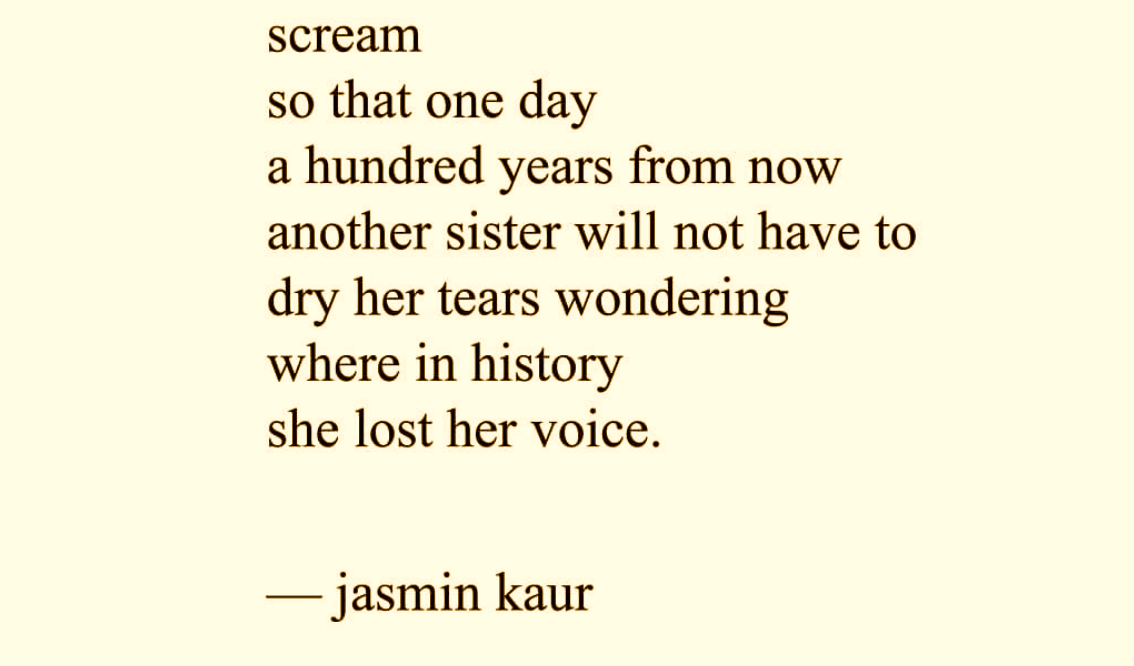
What is at stake when telling our stories, reflections, experiences, and memories — even when they are negated, minimized, or invalidated?
When women of color speak, who listens?
I have experienced sexual harassment in the workplace and in public spaces.
Unfortunately, many women have experienced this too. Sexual harassment is so prevalent that it’s usually expected to occur and is chalked up to masculinity. The phrase “boys will be boys” gets used frequently to justify so many things, i.e. racist, sexist, and/or homophobic epithets, massage parlors, strip clubs, catcalling, cheating, sex trafficking, prostitution, pornography, militarism & sexual access to children and women’s bodies, etc. If people are considered the “supply” then that’s objectification. How about we question the “demand”?
Along these lines, unfortunately, as well, questions about the who, what, and why of the reporting of the incident often eclipse questions of the who, what, and why of the incident itself.
Who is believed and protected then?
Why didn’t she say anything before? How could she say something like that? Is she trying to ruin him? Maybe she’s just not strong enough to handle it? What makes her think she’s so special? Isn’t she just doing this for attention?
These questions sound ridiculous because they are.
“But another thing that has always haunted and obsessed me is trying to write the things that have always haunted and obsessed those who have come before me.” – Edwidge Danticat
In one instance, when other women came forward and approached me about reporting our individual experiences, I agreed that, as a unit, we could be stronger. However, when whispers of disgruntlement arose from other co-workers, they withdrew their complaints and told me so after the fact. The impacts and consequences of the initial reporting fell on me.
That was a battle I did not win, and the scars of betrayal and retaliation affected my personal and professional well-being.
My best choice was to leave and rebuild, and so I did.
Over and over again.
The rumblings of sexual harassment and the need for telling followed me across state lines, national borders, and concrete walls.
Well-meaning people have, on occasion, tried to convince me that a bad situation was not so bad. While I believe in being hopeful, positivity doesn’t make a situation go away. Shutting your eyes, covering your ears, and staying silent don’t stop what’s happening — whether you want to see it, hear it, believe it, or not.
I’ve been encouraged to just do my best to endure being targeted and fetishized for my gender and ethnicity. I’ve been told that, maybe if I strengthen and heal myself, sexual harassment in the classroom would be easier to deal with.
All in all, I am not opposed to using clever, creative solutions to solve a difficult situation.
What I don’t understand is how come, in everyday conversation, the emphasis is more so on how tactics must be used to cope with a situation instead of dismantling the situation. And, what I still don’t understand is how come the responsibility of preventing or coping with the situation is greater than the responsibility of just not committing harmful actions in the first place.
Are actions just not harmful if someone doesn’t say it hurts? And, what if they do? Does it matter who’s being hurt?
At a past conference, I attended a roundtable discussion intended to address women’s issues with sexual harassment. Although the women present were of different ethnic backgrounds, it became apparent that this session was solely about white women’s issues with sexual harassment. What made it apparent? While white women in the roundtable discussion shared their experiences, I listened. When the question of possible coping strategies arose, I spoke up and listed a handful. Immediately, several women expressed their doubts and asked how I knew they worked.
“Because I’m here.”
I knew they worked because I was still alive. I knew they worked because I was present to talk about them.
And, for all that, they still didn’t believe that sexual harassment happened. They didn’t believe that I, a woman of color, experienced sexual harassment. And, again, that was when the discrediting began.
Silencing, distancing, and censorship happened. Enough people, enough for me to notice, distanced themselves from associating with me. A friend confessed, in a drunken moment, that he thought I was still cool and that he didn’t care what others said but would continue to hang out with me anyway. My heart sank. I felt alone. Because enough people distanced themselves from me, I was alone. In potentially dangerous moments, I was alone. When I needed support the most, I was alone. Positive thinking didn’t dull the compartmentalizing of emotions, the sadness of being alone, and the exhaustion of being strong every time I went outside by myself.
There were a few brave, caring women who remained friends with me during this time, and I am still appreciative and grateful for them. They supported me. They never required proof or evidence of my pain. Even when I didn’t talk about it, they believed me. When I talked about it, they believed me.
When I, a woman of color, spoke about my experience, they listened.
“I have come to believe over and over again that what is most important to me must be spoken, made verbal and shared, even at the risk of having it bruised or misunderstood.” – Audre Lorde
I’ve noticed that I get to see who doesn’t believe me and who blames me for what I experience, how I coped, and how I survived at all. The most common reaction has been that traumatic experiences were too much because I wasn’t strong enough and was unfamiliar with difficult situations. And, I realized that those reactions were their defense mechanisms to protect insecurities about themselves and their limiting beliefs to keep their sense of self in tact.
When people feel powerless to or overprivileged about their own truths, they are less inclined to acknowledge another’s power in their truth.
When people engage in humiliation, they sever dignity, integrity, and compassion.
When someones shares something that was harmful then is told that never happened, that denial and invalidation in itself is harmful.
There’s a difference between communicating to help someone understand the message and communicating to justify the existence of the message.
I’ve been told that I’m intimidating. Other times, too strong or not strong enough. I don’t get to feel or talk. I’ve been told that I just don’t understand. I’ve been shown that I just don’t get to experience support or sympathy. And, I know all of this is not true.
I haven’t written a blog post in a long time because I struggled with what I named and how to mention people anonymously. Ultimately, I reaffirmed that I’m not going to ask permission to write and speak from people who ignored, invalidated, and censored me. Many people said that the experiences seemed too unreal to happen. But, they were real and they did happen. That was my experience. I get to talk about it.
In the 21st century, I am still hopeful that people try to think outside of the privileges that they have and understand that systematic oppressions have very real impacts. However, biases about what women of color can endure and transcend does not mean that we should be pushed to the point of exhaustion.
As women of color, our strength does not need to be measured and proven by how much pain we can carry. Our voices are not louder based on who can speak for us. Our presence is not proven by how we decorate or diversify others.
Our power is not in how we compete with each other and tear down ourselves.
Our power lies in the attuned collective struggle for our “liberation and freedom from” not our complicity with “at the expense of”.
Because we are here. We are not lifeless, and we are not invisible.

 Reflections Told