The first time I flew from South Korea to the Philippines, I took a flight from Incheon International Airport, which is just outside of Seoul, to Clark International Airport, which is in Angeles City.
Clark International Airport, about 2 hours north of the capital city Manila, is not a major airport. However, it is located on a former U.S. Air Force Base and is in the thick of a red-light district. Also, it is the airport nearest to where my family lives.
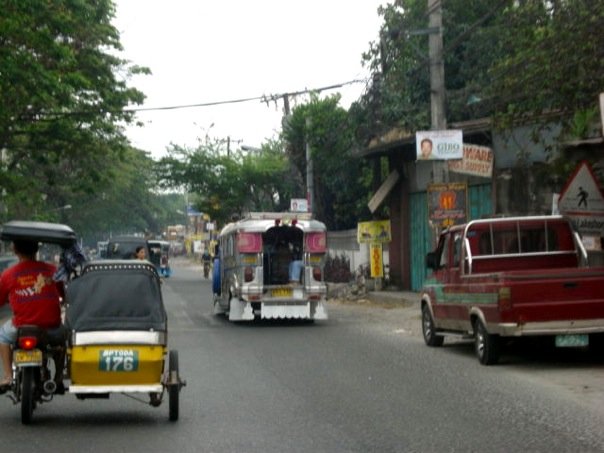
I remember, as a child, my first visit to Angeles City. At the time, Clark Air Base was still in operation. To reach home, we drove on MacArthur Highway and passed through an entrance, literally and colloquially, called Checkpoint. I remember jeepneys — decorated surplus remnants of U.S. military occupation during WWII — carrying local residents, and jeeps — traveling to and from the base — carrying active-duty airmen. The names of bars and hotels changed from season to season, but I recall the Cherry Club, La Dolce Vita, and The American Hotel standing dingily with long-haired, brown-skinned Filipina women known as juicy girls lounging on the front patios and tall, sunburned White men striding lazily down the crowded dirt road.
Most of all, I remember how poverty and exploitation were normalized.
Later, as a college student, I visited again. During a quick email session at a neighborhood internet cafe around the corner from my family’s home, I noticed the buzz of the air conditioning, the accents of the middle-aged Australian and American men seated at computers, and the blurry images of Filipina women staring back at them on the screens. Two older men sitting nearby scoffed that their wives back home resented the Southeast Asian excursions. One commented that he preferred the Philippines over Thailand while the other nodded and chuckled in agreement.
My first late-night flight from Incheon to Angeles City was a tale in caution. After most of the middle-aged Korean male passengers onboard the tiny aircraft became boisterously drunk, I forced my eyes open and pretended being absorbed in a book. Occasionally, I looked out the dark window. The male passenger in the aisle seat shyly attempted conversation by stating how excited he was to visit his fiancée and his Filipino side of the family. His tan skin barely had any lines, and he appeared to be in his late 20s. He continued speaking happily while I murmured a few polite responses. The man was just giddy and in love. Really, I couldn’t fault him for that.
What happened next even caused him to stop mid-chatter. One of the middle-aged, male Korean passengers ambled up the aisle with his beverage in hand and positioned himself at our row. His face was red from alcohol. His eyes, peering at me and the empty middle seat, flashed the same savage, hungry gleam that I had grown to recognize on subway platforms, in bus terminals, in elevators, and on sidewalks. Only this time, we were in a closed airplane cabin, and there was no where to run.
The aisle-seat passenger stopped rambling and stared confusedly at the red-faced gawker standing nearby.
Steadily keeping my gaze on the now-silent aisle-seat passenger, I said loudly: “What’s he doing staring over here?”
Still red-faced, he mumbled, “I’m just looking for a place to sit.”
“We’re on a plane. Doesn’t he already have a seat?” I retorted, still looking at the confused chatterbox.
Drink and all, the red-faced ajeosshi turned around and returned to the back of the plane.
Looking out the window again, I recalled that if you have something that others think should be theirs, they will do their best to take it. Even when it’s yours, they try.
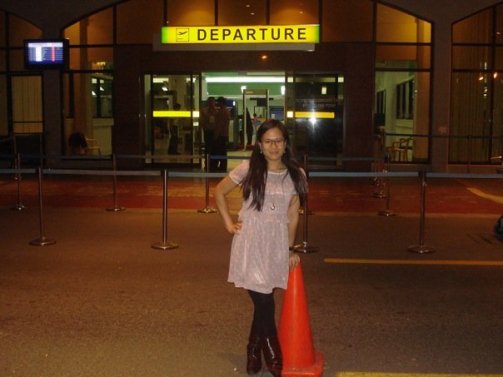
After landing on the tarmac, I walked quickly into the terminal and waited to be stamped through. While standing in line, I noticed most of the Korean passengers claiming their golf bags from the carousel. Clark, as I later learned, featured golf courses and transformed military bungalows into vacation accommodations.
The line split in two. One was for American citizens while the other line was for everyone else. While reaching into my bag, I noticed an ajeosshi or three look me up and down. Then – with a swift jerk – they averted their eyes as I stepped to the left with my blue passport.
My heart sank, and anger swelled inside of me.
No passport should be privileged over another. No one should be exploited and fetishized as less than or in service to another.
I thought of the countless Filipina women who are OFWs, exported for labor, exalted in terms of GDP and monetary remittances, and whose bodies sometimes returned in zipped bags. I thought of the Filipina women I saw standing outside of the bars. I thought of how, in broad daylight, an ajeosshi would approach me and ask if I was a foreign wife or a Filipina. In horror I realized that, contextually, Filipina was being used as a euphemism for a prostituted woman — meaning, are you taken or for rent?
No. Regardless of status, Filipina women anywhere should not be for rent nor for sale.
Have a seat.

 Reflections Told
Very eye opening and powerfully written! Thanks for sharing and speaking up for women with no voice! Great work!
LikeLike
Leah, this gave me chills. Clearly, this story is aching to be told. Thank you.
LikeLike